NFL icons Shannon Sharpe and Chad Johnson weighed in on the controversy during the Nightcap podcast. Johnson pointed out that Kerr’s decision seemed heavily influenced by public pressure, highlighting the immense challenge of keeping every player content. “The backlash from the media and fans was palpable,” Johnson remarked. “I think Kerr’s decision to play Tatum in the next game is a direct result of this uproar.”
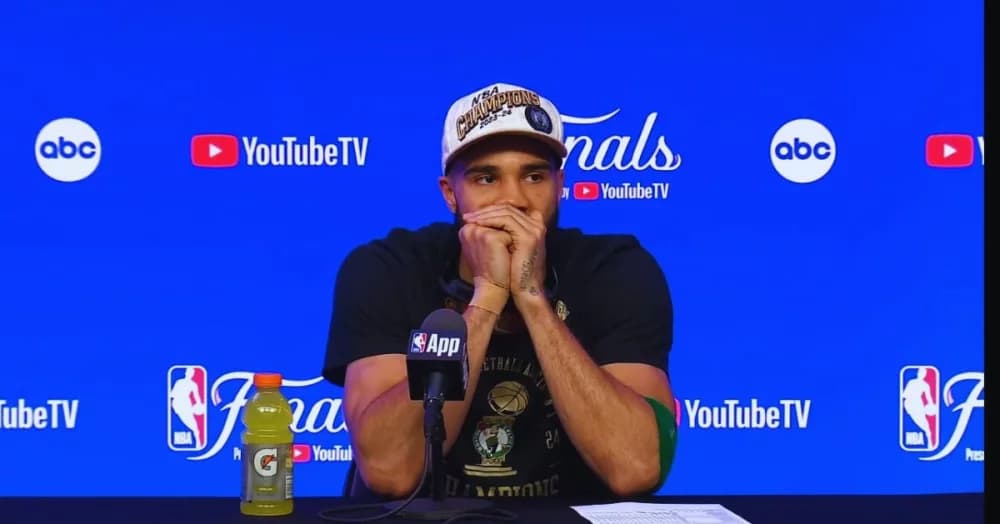
Shannon Sharpe, while acknowledging the tough choices coaches face, argued that the situation was far from a simple benching. He drew a provocative comparison to Christian Laettner’s 1992 Dream Team stint, suggesting that Tatum’s benching was more shocking. “Tatum isn’t a rookie like Laettner was back then,” Sharpe argued. “Laettner had zero NBA experience, while Tatum is an established All-Star. This is a different scenario altogether.”
Interestingly, despite Laettner’s limited role on the Dream Team, he still saw more action than Tatum did in Paris. During the 1992 Olympics, Laettner played all eight games and averaged 4.8 points per game. Tatum, despite being arguably one of the top five players on Team USA, didn’t see the floor in the opener. While Team USA dominated their opponents by a hefty margin, Tatum’s absence remains a point of contention.
Critics argue that Tatum’s inclusion could have bolstered Team USA’s performance against Serbia. Given the lopsided nature of the game, Kerr might have used the opportunity to integrate Tatum into the rotation. Whether this decision was driven by tactical considerations or the overwhelming media scrutiny remains unclear.
As Team USA prepares for their next game against South Sudan, the spotlight will undoubtedly remain on Kerr’s rotation decisions. The controversy surrounding Tatum’s benching has ignited a broader discussion about coaching strategies and player management under intense public scrutiny.